

Losing a dog is every pet owner’s worst nightmare.
Whether your dog escapes from the garden, slips their lead during a walk, or decides to chase a squirrel into the distance, those first few moments can be incredibly stressful.
Fortunately, technology has come a long way. Modern GPS trackers allow owners to monitor their dog’s location in real time, helping reunite pets and owners faster than ever before.
In this guide, we’ll explore how GPS trackers work, what features matter most, and why more dog owners are investing in a reliable GPS tracker for dogs to help keep their pets safe.
What Is a Dog GPS Tracker?
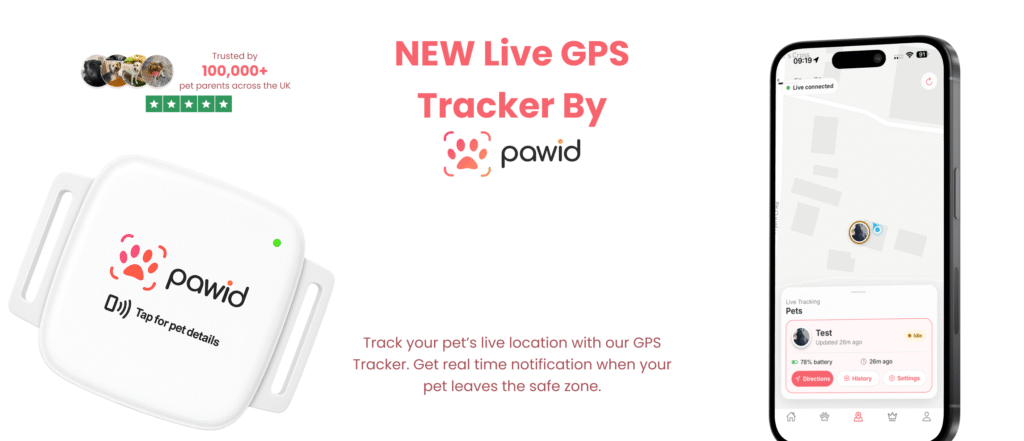
A dog GPS tracker is a small electronic device that attaches to your dog’s collar and provides location updates using GPS satellites and mobile network technology.
Unlike traditional ID tags or microchips, GPS trackers actively report your dog’s location, allowing you to see exactly where they are through a smartphone app or web platform.
Most modern trackers provide:
- Real-time location updates
- Safe zone alerts
- Location history
- Escape notifications
- Activity tracking
- Multi-pet management
This means you can quickly locate your dog if they become lost or wander further than expected.
Why More UK Dog Owners Are Using GPS Trackers
Dog ownership in the UK continues to grow, and with that comes a greater focus on pet safety.
While microchips remain legally required, they don’t actually help you locate your dog. A microchip only stores identification details that can be read once somebody finds your pet.
A GPS tracker works differently.
Instead of waiting for somebody else to find your dog, owners can use real-time pet tracking technology to locate their pet immediately.
This can be particularly useful for:
- Dogs with strong prey drive
- Nervous or reactive dogs
- Working breeds
- Dogs that regularly walk off lead
- Families who travel frequently
- Owners living near open countryside
How Does a Dog GPS Tracker Work?
Understanding how GPS tracking works can help you choose the right solution for your dog.
GPS Satellites
The tracker communicates with GPS satellites orbiting Earth to determine its precise location.
Mobile Data Connection
Once the location is calculated, the tracker sends that information through a mobile network.
This is why most GPS trackers require a subscription plan, as they rely on mobile connectivity to transmit data.
Smartphone App
The location data is then displayed through a mobile app or web dashboard, allowing owners to view their dog’s location instantly.
This process happens continuously, creating an effective system for live GPS tracking for dogs.
GPS Tracker vs Microchip: What’s The Difference?
One of the most common misconceptions among dog owners is that a microchip can track a dog’s location.
Unfortunately, that’s not the case.
| Feature | GPS Tracker | Microchip |
|---|---|---|
| Real-time tracking | ✓ | ✗ |
| Location alerts | ✓ | ✗ |
| Location history | ✓ | ✗ |
| Find a lost dog | ✓ | Limited |
| Legal identification | ✗ | ✓ |
The safest approach is to use both.
A microchip ensures legal identification, while a GPS tracker helps you find your dog before somebody else needs to.
Features To Look For In A Dog GPS Tracker
Not all GPS trackers are created equal.
Here are the features we believe matter most.
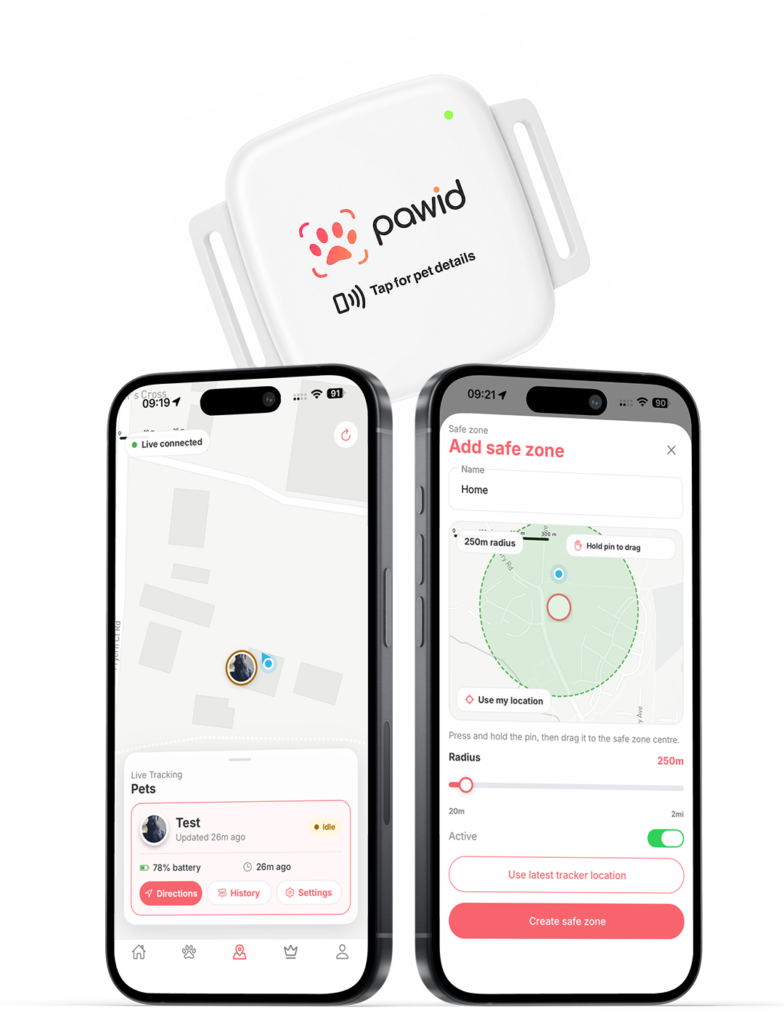
Real-Time Tracking
The primary purpose of a GPS tracker is to show your dog’s current location.
Look for a tracker that provides regular location updates and accurate mapping.
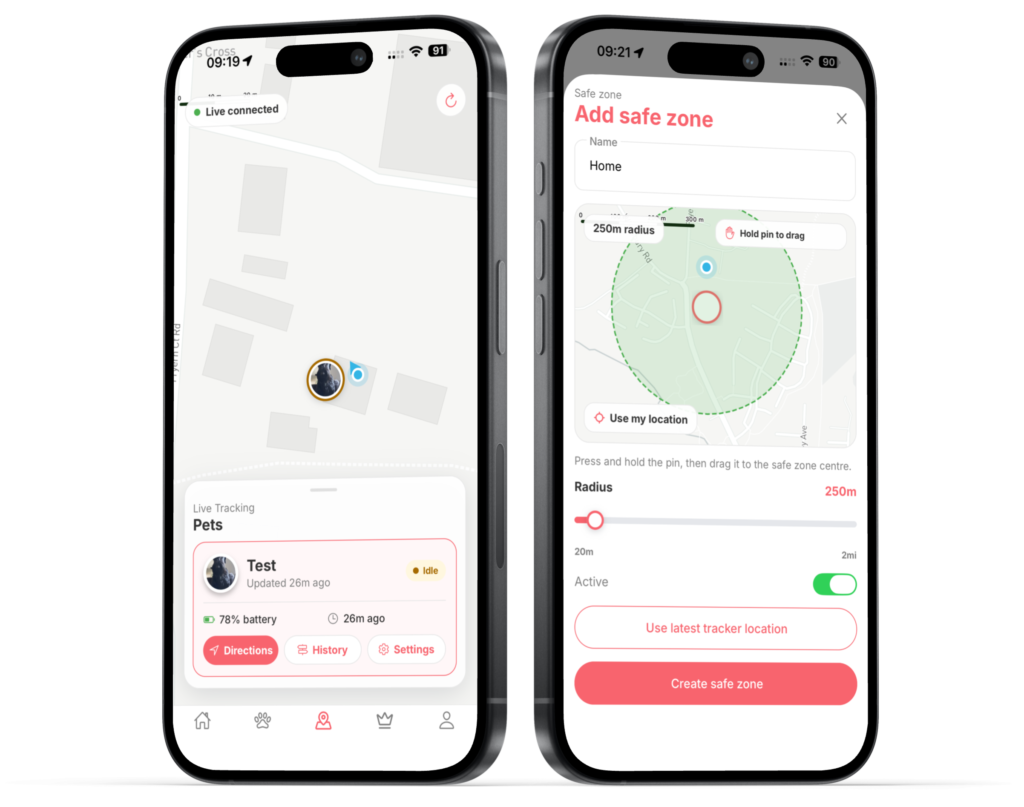
Safe Zones & Virtual Fences
Safe zones allow owners to create boundaries around areas such as:
- Home
- Garden
- Dog sitter’s house
- Holiday accommodation
If your dog leaves the area, you’ll receive an instant notification.
Location History
Location history helps owners understand where their dog has been throughout the day.
This can be invaluable if your dog goes missing or develops a habit of exploring particular areas.
Waterproof Design
Dogs don’t care about the weather.
Your tracker should be capable of handling:
- Rain
- Mud
- Wet grass
- Swimming
- Outdoor adventures
Battery Performance
A tracker is only useful when it’s powered.
Look for a tracker that balances battery life with accurate location reporting.
Introducing The Paw ID GPS Tracker
The newly launched Paw ID GPS Tracker has been designed specifically for UK pet owners looking for a reliable and affordable tracking solution.
Unlike many alternatives that focus solely on tracking, Paw ID combines GPS technology with an existing pet safety ecosystem already used by thousands of pet owners across the UK.
Key Features
The Paw ID GPS Tracker includes:
- Live GPS tracking
- Safe zone alerts
- Escape notifications
- Mobile app access
- Web dashboard access
- Multi-pet support
- Waterproof IP67 design
- Lightweight and compact form factor
The tracker is designed to provide peace of mind without the high upfront costs often associated with premium tracking devices.
Paw ID GPS Tracker Subscription Plans
Because GPS trackers rely on mobile networks, subscriptions are required to cover connectivity costs.
Paw ID offers flexible options depending on how long you’d like to subscribe.
Basic Plan
Includes:
- Live GPS tracking
- Safe zone alerts
- Mobile app access
- Web platform access
- 24-hour location history
Premium Plan
Includes everything in Basic plus:
- Up to 365 days of location history
- Advanced historical movement tracking
- Extended route history
Owners can choose from:
- 6 Months
- 12 Months
- 24 Months
- 36 Months
If you’re comparing options, it’s worth reviewing the latest GPS tracker for pets plans directly on the Paw ID website.
Which Dogs Benefit Most From GPS Tracking?
While any dog can potentially go missing, some dogs are naturally more adventurous than others.
Working Breeds
Breeds such as:
- Border Collies
- German Shepherds
- Giant Schnauzers
- Belgian Malinois
- Spaniels
often have strong instincts and high energy levels.
Rescue Dogs
Rescue dogs can sometimes become startled in unfamiliar situations.
GPS tracking provides an additional layer of security during the settling-in period.
Adventure Dogs
Dogs that regularly accompany their owners on:
- Hiking trips
- Beach walks
- Camping holidays
- Countryside adventures
can benefit greatly from GPS tracking technology.
Are Dog GPS Trackers Worth It?
For many owners, the answer is yes.
Most people purchase home insurance hoping they’ll never need it.
GPS trackers are similar.
You may never need to use the tracking feature in an emergency, but if your dog ever goes missing, having access to a dog GPS tracker UK solution could save hours of searching and significantly improve the chances of a quick reunion.
Frequently Asked Questions
Can I Track My Dog Anywhere In The UK?
Yes, provided there is compatible mobile network coverage in the area.
Does A GPS Tracker Replace A Microchip?
No.
A GPS tracker and microchip serve completely different purposes and should be used together.
Is The Paw ID GPS Tracker Waterproof?
Yes, the device features an IP67 waterproof rating designed for everyday outdoor use.
Can I Manage Multiple Pets?
Yes. Multiple pets can be managed through the Paw ID platform.
Do GPS Trackers Require A Subscription?
Yes. GPS trackers require mobile connectivity to send location data to your app and dashboard.
Final Thoughts
No technology can completely prevent a dog from going missing.
However, modern GPS tracking technology can dramatically reduce the time it takes to locate a lost pet.
Whether you’re walking through woodland, visiting the beach, exploring the countryside or simply relaxing in your garden, knowing you can locate your dog in real time provides reassurance that many pet owners find invaluable.
If you’d like to learn more, view the full specifications, subscription options and launch pricing for the Paw ID GPS Tracker.